
Why Do I Need A Water Softener & How Do They Work?
Why do I need a water softener?
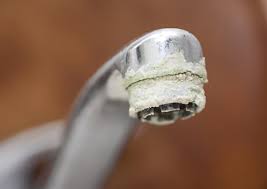
7 Signs You Need A Water Softener. If you find that your sinks are riddled with stains and your skin is dry and itchy, you might have a problem with hard water. If so, you might need a water softener Basically, water softeners take out extra calcium and magnesium ions using an exchange.
Water Softener Sale!
All SoftPro Water Softeners Reduced By $100! Use Code "softpro" At Checkout!
High-Efficiency Up-flow SoftPro Softeners Saves You Up To 75% In Salt And 64% In Water Waste Compared To Traditional Down-flow Water Softeners Saving You Money!

FREE SHIPPING ON ALL ORDERS!
Specializing in water Treatment since 1990, Family owned and operated, When you speak to a representative you are speaking with one of the owners. We have an invested interest in making sure our customer get the best equipment and service available and to keep our customers happy. We carry the most efficient Upflow SoftPro® Water Softeners that save 75% Salt and 64% water per regeneration over the Clack and Fleck Water Softener systems.
No one knows water softeners and water treatment better than Quality Water Treatment and No one gives Free Lifetime Technical support to their customer as we do. With more than 27 years in commercial and residential water treatment, we are extensively trained and certified in the industry with many resources available to assist you before and after your purchase. Customer service is a big part of our business. We strive not to be a success, but rather to be of value! read our Water Softener Reviews.
What is hard water?
Hard water is the most common problem found in the average home. Hard water is typically defined as water having more than 1 GPG (grains per gallon) of dissolved minerals in it, generally consisting of calcium, magnesium carbonate, and/or manganese. The amount of hardness in water is usually measured in either PPM (parts per million) or GPG (grains per gallon).
17.1 PPM or 17.1 Mg/L = 1 GPG
—OR—
PPM or Mg/L divided by 17.1 = GPG
Go here to view the chart: https://www.qualitywatertreatment.com/product_help/
Why should I use a water softener?
Soft water greatly reduces the scaling of pipes, faucets, and bath fixtures, and reduces spotting of glasses, dishes, and flatware. Soft water also helps detergent clean your clothes better while making your clothes last longer too!
You can reduce your laundry detergent, dishwashing soap, hand soap and shampoo to half what you would normally use, not to mention soft water is much more pleasant to wash with, leaving less soap scum on you, and your tub/shower.
What are the effects of had water and why should I remove it from my water?
For many uses, it would not matter. For instance, to put out fires, water your lawn, wash the mud off the streets or float your boat, water would have to be pretty hard to cause a problem. But for bathing, washing dishes and clothes, shaving, washing your car and many other uses of water, hard water is not as efficient or convenient as “soft water.”
For instance, you use only 1/2 as much soap cleaning with soft water because hard water and soap combine to form “soap scum” that can’t be rinsed off, forming a bathtub ring on all surfaces and drys leaving unsightly spots on your dishes. When hard water is heated, the hardness minerals are re-crystallized to form hardness scale. This scale can plug your pipes and hot water heater, causing premature failure, necessitating costly replacement.
Soap scum remains on your skin even after rinsing, clogging the pores of your skin and coating every hair on your body. This crud can serve as a home for bacteria, causing diaper rash, minor skin irritation, and skin that continually itches. For many industrial uses, the hardness minerals interfere with the process, causing inferior product.
Why shouldn't I use a water softener?
If you use salt to regenerate your softener, then a small amount of sodium is added to the water. For the majority of people, this is not a problem.
If you’re on a sodium-restricted diet, we recommend either:
* Leaving the cold side of your water supply at your kitchen faucet on hard water, or
* Installing a separate faucet in the kitchen that dispenses unsoftened water for drinking and cooking, or
* Use potassium chloride instead of salt to regenerate your softener, (which adds a small amount of potassium to your water!), or
* Install a Reverse Osmosis unit at your kitchen sink, which will remove approximately 90-95% of Total Dissolved Solids (TDS) that are suspended in your drinking water, including the residual salt from your softener!!
Why does a water softener add salt to the water?
The softener operates using an “ion exchange” process. When hard water contacts the cation resin beads, by passing through the softener mineral tank which has soft sodium/potassium ions attached to them, an ion exchange process takes place with the hard mineral ions, (normally calcium and/or magnesium), and during this contact, simply trade places with the soft sodium/potassium ions.
After a calculated period of use, the sodium ions are eventually depleted and are replaced by calcium and magnesium ions.
At this point, the resin then needs to be regenerated with new sodium ions, so the resin will again be able to exchange the hard for the soft. Salt, or sodium chloride, rinse through the resin beads during the regeneration of the softener and washes the hard water ions off of the resin beads replacing them with new sodium ions.
How much salt does a water softener add to my water?
That depends on the hardness of the water entering the softener. Below is a simple chart which shows the additional amount of sodium you would consume by drinking one quart (32oz) of softened water. As you can see, for water 20 grains hard you only have 150 milligrams per quart of water in sodium added which is less than one slice of regular white bread!!
| Hardness in Grains per Gallon |
Sodium in Milligrams per Quart |
|---|---|
| 1.0 | 7.5 |
| 5.0 | 37.5 |
| 10.0 | 75.0 |
| 20.0 | 150.0 |
| 40.0 | 300.0 |
To make a more normal comparison using everyday foods:
| Item | Sodium in Milligrams |
|---|---|
| One slice of regular white bread | 161 |
| 3/4 cup of canned baked beans | 1130 |
| 1 tablespoon of catsup | 204 |
| 1 medium frankfurter | 610 |
| 1 cup of whole milk | 127 |
Here's What Our Customers Are Saying...
-

“I just wanted to say thank you for your excellent products and service over the past 12 years. ” - Daniel R. - Texas
-

“After we installed the Softpro Elite I noticed a significant difference in the house water quality. ” - Julie M. - Florida
-

“I decided to go with the Softpro water softener over Fleck. Very impressed and satisfied with their products and customer service! ” - Roy P. - California


