

Well Water Iron Filter
Iron Problems With Your Home's Water?

An iron problem is characterized by the red-brown staining of bathroom fixtures and laundry. In well water, iron usually occurs in its ferrous state.
The water is clear when drawn but once exposed to air the iron changes into a ferric (oxidized) state. The water turns red and forms insoluble “rust” particles.
Staining can be caused by as little as 0.3 milligrams per liter (mg/L).
Depending on the iron concentration there are several solutions to this aggravating water problem.
Proper Iron Filter Sizing
Measure your well pump flow rate

The larger the iron filter and the type of media being used dictates what pump size is required.
Some iron filters can take up to 20 GPM to backwash.
If you install an iron filter that can’t be backwashed properly the media well get fouled and the system will not perform as it should.
A simple test with a basic 5 gallon bucket will measure your effective well pump approximate gallon per minute.
Measure Your WELL PUMP FLOW RATE
Check your well pump's effective flow rate... Easy as 1, 2, 3...

Minimum Water Flow Rate Required:
The size of an iron filter or pH neutralizer system is dependent on the flow rate from your well pump.
Please check your flow rate to select the properly sized system.
Do not select a system that requires a higher flow rate.

🛎️ Priority - Know your Pump Flow Rate
Your well pump GPM is the #1 Sizing Factor
Remember that the size of the home and the number of bathrooms come second when sizing iron filters.
This is due to your well pump ability. You can only use what your pump will give you.

For Example:
If you have three showers running at the same time you need 7.5 GPM to operate them all and still have good pressure.
If your well pump only gives you 6 GPM you will not be able to operate all those shower heads at the same time and have good pressure.
So if your well pump does 6 GPM you are limited to an iron filter that requires less then 6 GPM to backwash.
Most iron filters that fit this criteria have flow rates of 4 to 7 GPM.
Customers' Favorite
The SoftPro® Iron Master AIO Filter


- Next Generation High-Efficiency Design
- Air Injection Oxidation (AIO) Technology
- Chemical-Free Operation
- Removes Iron up to 30 PPM - Most in the market
- Removes Manganese up to 7 PPM
- Removes hydrogen sulfide up to 5 PPM
- Media life averages 8-10 years before replacement is needed
Other Iron Filter Systems
Greensand Iron Filters
Iron, Sulfur, & Manganese Removal.
Greensand has a thin coating of manganese oxide in conjunction with potassium permanganate. This will oxidize iron, sulfur, & manganese for better removal.
This system has low flow rate abilities in comparison to other systems offered and requires an oxidizer to oxidize iron, sulfur, and manganese so the greensand media can remove it.
This system was one of the original iron filters on the market dating back to the early 1970s.

Iron Content in your Water
What is this iron in my water?


Disinfection & Filter Treatment
The Triple O Ozone System

- Kill virus on contact.
- Kill algae spores, fungus, mold and yeast spores.
- Kill bacteria on contact thousands of times faster than chlorine or bromine.
- Oxidize oils and precipitate heavy metals.
- Remove color and odor, leaving a fresh, healthy bouquet.
- Remove excess iron, manganese, and sulfur by a process known as micro flocculation, thus conditioning the water naturally without chemical additives.
- Ozone leaves no residue, it’s only by-product is pure oxygen.
- Reduce scale build-up on equipment such as pipes and water heaters, and staining of showers, sinks, bathtubs, and toilets.
SoftPro Well Filter Packages
Which Well filter Package is for you?
A Quality softener may not be enough... It depends on your water quality.
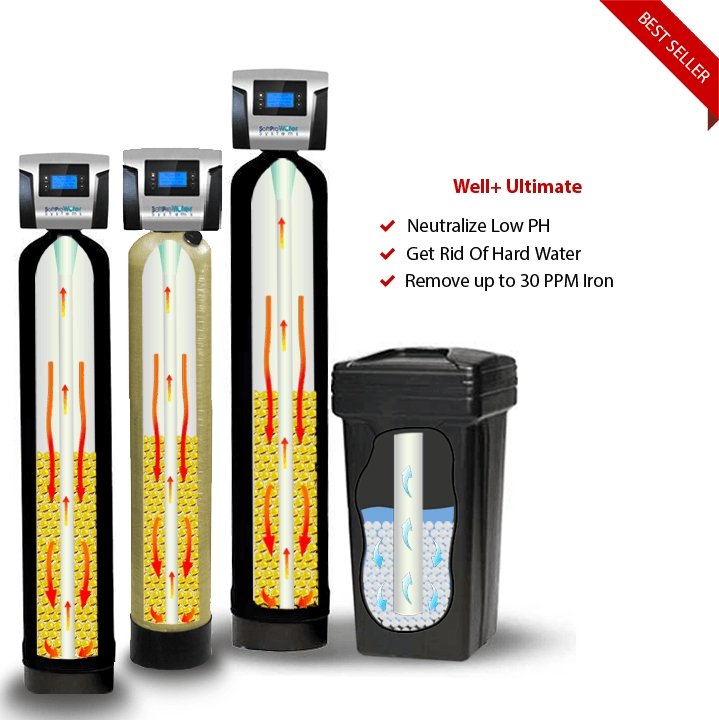

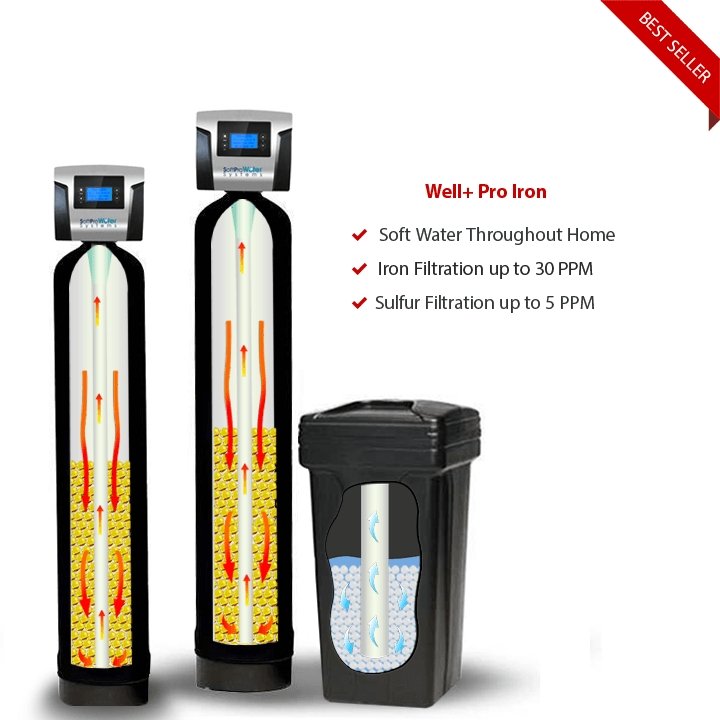
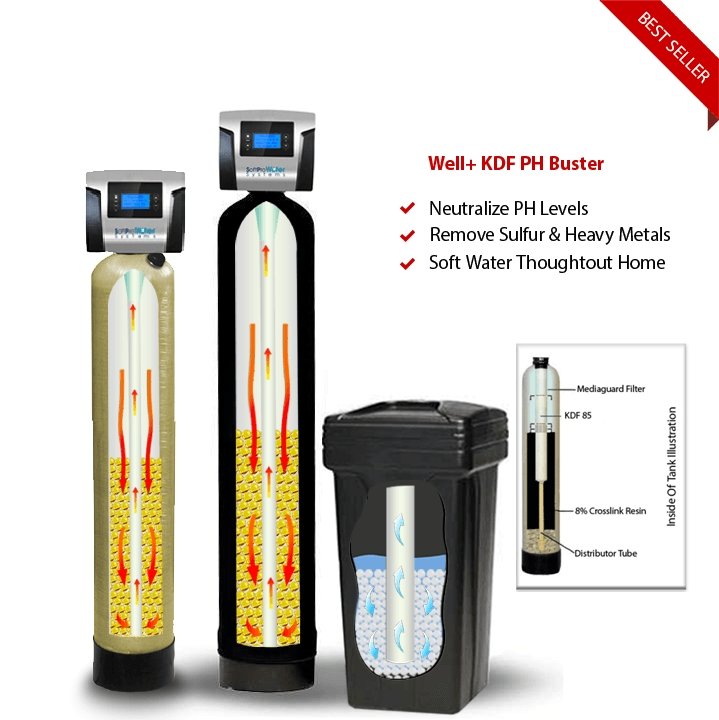
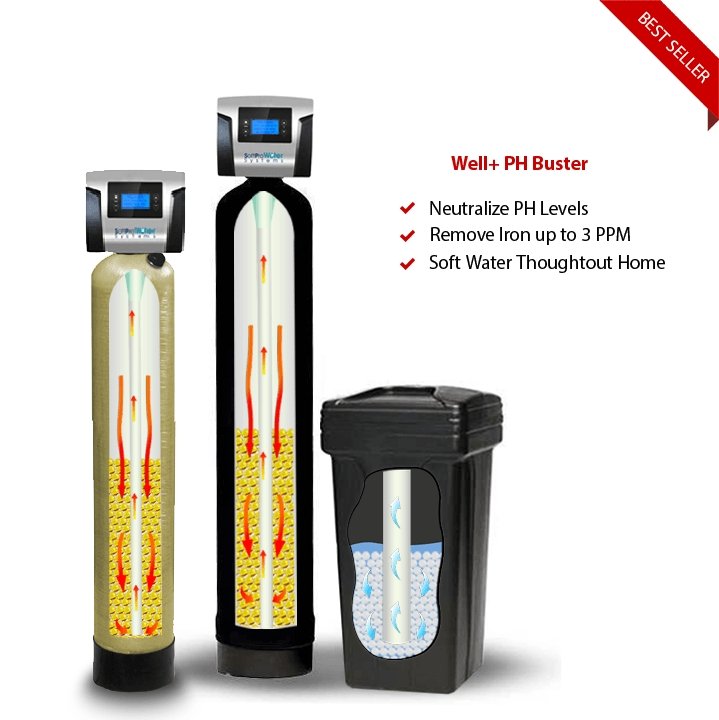


PROPER FILTER SIZING
What Filter Size?
In general, match your effective well pump flow rate to the backwash requirements to select the appropriate filter size.
Typical size is the 1.5 CUFT size, if your well pump can accommodate. An option is that you can also select a smaller size, if higher flow rates are not required.
NOTE: Minimum Well Pump Flow Rates Are Required. See Specs below or try our WISDOM tool.
WATER INTELLIGENCE ENGINE

Try The Free Sizing Calculator
...Well Pump Flow Rate Is Needed
USE WISDOM NOWPRODUCT & TECHNICAL SUPPORT
Real Experts That You Can Count On

Steer clear of the guessing game.
You are investing your hard earned money into a solution to provide quality water for your family.
We cut through the clutter for you to make the right decisions.
Unlike the big box stores…
Our team of experts recommend the best solutions that’s available in the entire marketplace.
Our water treatment consultants help you before AND after your purchase.
Our customers are like family.
WHY BUY FROM US
Real Experts. Real Value.




✅ FINANCING OPTIONS
Get Quality Water Today!
Buy now, and pay over time.
We have several financing options to make your investment in soft, clean water for your home and family easy.
Multiple option plans...


SoftPro Authorized Dealer

Triple O Authorized Dealer


Here's What Our Customers Are Saying...
-

“I just wanted to say thank you for your excellent products and service over the past 12 years. ” - Daniel R. - Texas
-

“After we installed the Softpro Elite I noticed a significant difference in the house water quality. ” - Julie M. - Florida
-

“I decided to go with the Softpro water softener over Fleck. Very impressed and satisfied with their products and customer service! ” - Roy P. - California


